Journey Through the Solar System: Planets for Kids
Close your eyes and imagine zooming away from Earth, higher and higher, until our entire planet looks like a tiny blue marble floating in the darkness of space. That's where we're going today—to explore the amazing neighborhood we call the solar system. Our solar system is home to the sun, eight incredible planets, hundreds of moons, millions of asteroids, and countless comets. It's been up there for about 4.6 billion years, and scientists are still discovering new things about it every single day.
The Sun: Our Star at the Center
In the middle of our solar system sits the sun, a massive ball of hot, glowing gases. It's so huge that you could fit about 1.3 million Earths inside it! The sun is what makes life on Earth possible. It gives us light and warmth, powers our weather, and helps plants grow. Without the sun, our planet would be a frozen, dark rock floating in space.
The sun is about 93 million miles away from Earth. That sounds far, but light from the sun reaches us in just about 8 minutes. If you could drive a car to the sun at highway speed, it would take you about 170 years to get there. Spacecraft from NASA have made the journey in about three months, traveling at tens of thousands of miles per hour.
Mercury: The Speedy Planet
Mercury is the closest planet to the sun and also the smallest of the eight planets. It's named after a speedy messenger from Roman mythology because it zooms around the sun faster than any other planet. One year on Mercury (the time it takes to go around the sun) is only 88 Earth days!
Even though Mercury is closest to the sun, it's not the hottest planet. That's because it has almost no atmosphere to trap heat. When the side facing the sun gets super hot (about 800 degrees Fahrenheit), the other side can be freezing cold (around -290 degrees Fahrenheit). Mercury has no air to breathe, no weather, and no moons. It's a rocky world covered with craters from asteroid impacts, kind of like our moon.
Venus: The Hottest Planet
Venus is the second planet from the sun and often called Earth's "twin" because they're similar in size. But that's where the similarities end. Venus is the hottest planet in our solar system, even hotter than Mercury, which is closer to the sun!
The reason Venus is so hot is its thick atmosphere, which is full of clouds of toxic gases. These gases trap heat like a blanket, making the surface about 900 degrees Fahrenheit—hot enough to melt lead! Venus also spins backward compared to most planets, which means the sun would rise in the west and set in the east if you stood on its surface. That's pretty confusing!
Earth: Our Home
Third from the sun, Earth is the only planet we know of that has life. That's because it has liquid water on its surface, an atmosphere with oxygen, and just the right temperature for living things to thrive. Earth has mountains, oceans, deserts, forests, and ice caps. It's the most amazing planet in the solar system—because it's our home!
Earth travels around the sun at about 67,000 miles per hour, and it takes 365 days (one year) to make the trip. Our planet is tilted slightly as it spins, which gives us our seasons—spring, summer, fall, and winter. Earth has one moon, which we simply call "the Moon." It's the brightest object in our night sky and the only place beyond Earth where humans have visited.
Mars: The Red Planet
Mars is the fourth planet from the sun and gets its rusty red color from iron in its soil. It's sometimes called the "Red Planet" because the iron has rusted, just like an old bicycle left out in the rain. Mars is about half the size of Earth and has the tallest volcano in the solar system, called Olympus Mons. It's three times as tall as Mount Everest!
Mars has some pretty interesting features, including a canyon called Valles Marineris that would stretch across the entire United States if you placed it here. Scientists have sent many robots (called rovers) to explore Mars because they want to learn if Mars ever had conditions suitable for life. Mars has two small moons named Phobos and Deimos.
The Asteroid Belt
Between Mars and Jupiter lies a region filled with millions of rocks called the asteroid belt. Asteroids are leftover pieces from the early solar system that never formed into a planet. The biggest asteroid is called Ceres and is so large it's considered a "dwarf planet." Most asteroids in this belt are much smaller, and some are as tiny as pebbles.
Even though movies show spaceships dodging asteroids in this region, the asteroids are actually spread very far apart. If you flew through the asteroid belt in a spaceship, you'd probably never see another asteroid up close—they're just too far apart from each other!
Jupiter: The Giant
Jupiter is the biggest planet in our solar system—so big that you could fit all the other seven planets inside it and still have room to spare! If Earth were a grape, Jupiter would be about the size of a basketball. Jupiter is made mostly of gas and liquid, with no solid surface to stand on.
One of Jupiter's most famous features is the Great Red Spot, a giant storm that's been raging for at least 400 years. This storm is so big that two Earths could fit inside it! Jupiter has at least 95 moons, including the four large "Galilean moons" that are about the size of planets themselves. One of these moons, Europa, might have an ocean underneath its icy surface that could possibly have life!
Saturn: The Ringed Beauty
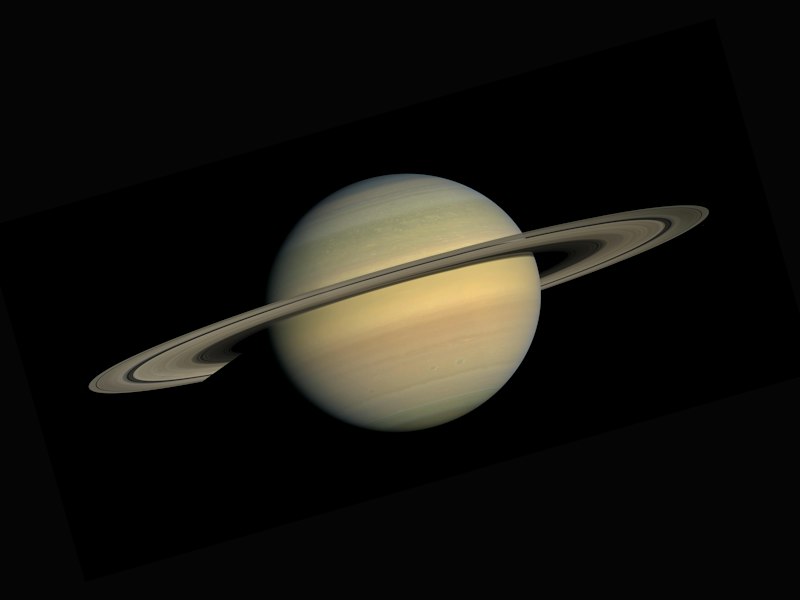
Saturn is famous for its beautiful rings, which are made of billions of particles of ice and rock. Some particles are as tiny as grains of sand, while others are as large as houses. The rings stretch out into space for almost as far as the distance from Earth to the moon, but they're surprisingly thin—only about 30 feet thick in most places!
Saturn is the second-largest planet and is so light that it would float if you could put it in a giant bathtub of water. It has more than 140 moons, including Titan, which is larger than the planet Mercury and has a thick atmosphere. Saturn's moon Enceladus shoots water into space like a fountain, and scientists think this water might contain ingredients for life.
Uranus: The Tilted World
Uranus is the seventh planet from the sun and is sometimes called the "ice giant" because it contains a lot of water, ammonia, and methane ices. What makes Uranus really unusual is that it spins on its side—its axis is tilted about 98 degrees, so it basically rolls around the sun like a ball.
Scientists think a massive object might have crashed into Uranus long ago, knocking it over. Uranus appears blue-green because of methane in its atmosphere. It has 27 known moons and a system of thin rings. Uranus is an "ice giant" because temperatures can drop to -224 degrees Celsius, making it one of the coldest places in the solar system.
Neptune: The Windy Blue World
Neptune is the eighth and farthest planet from the sun, about 30 times farther away than Earth. It's an icy giant similar to Uranus, with winds that blow faster than any other planet—up to 1,200 miles per hour! That's faster than the speed of sound.
Neptune appears deep blue because of methane in its atmosphere, similar to Uranus. It has 16 known moons, including Triton, which is so cold that nitrogen gas freezes on its surface. Triton orbits Neptune backward compared to most moons. One year on Neptune (the time to orbit the sun) lasts about 165 Earth years!
Fun Facts About Our Solar System
- If you could drive a car at highway speeds to the edge of our solar system, it would take about 157 years to get there!
- The footprints left by astronauts on the moon will be there for millions of years because there's no wind or rain to wash them away.
- More than 5,000 years ago, ancient people noticed that some stars moved across the sky in patterns. They called these "wandering stars" — today we know them as planets.
- Jupiter's moon Ganymede is the largest moon in our solar system—it's even bigger than the planet Mercury!
- A day on Pluto (one rotation) is longer than a day on Earth. It takes Pluto about 6.4 Earth days to turn once.
- Spacecraft have now traveled beyond our solar system into interstellar space—vastly empty regions between stars!
Exploring Space: Missions and Astronauts
Humans have been exploring space since 1961, when a Russian astronaut named Yuri Gagarin became the first person to travel into space. In 1969, American astronauts Neil Armstrong and Buzz Aldrin walked on the moon. Since then, astronauts have lived aboard the International Space Station for months at a time, conducting experiments and learning how to live in space.
Today, robots do much of the exploring for us. The Voyager spacecraft, launched in 1977, has traveled farther than any human-made object and is still sending signals back to Earth. The James Webb Space Telescope, launched in 2021, is helping us see distant galaxies in incredible detail. Mars rovers like Perseverance are searching for signs of ancient microbial life on the Red Planet.
Want to explore the solar system yourself? Try our interactive Solar System Tour tool to learn more fun facts about each planet! You can also learn about how water moves through Earth's atmosphere or discover what makes up the human body. Or try some science experiments at home to learn like a real scientist!
What It Means to Be an Astronaut
Have you ever dreamed of becoming an astronaut and floating in space? It's not as easy as it looks! Astronauts have to train for years, learning how to operate spacecraft, conduct scientific experiments, and handle emergencies. They practice underwater to simulate the feeling of weightlessness and study hard in school, especially in science, technology, engineering, and math (STEM).
Living in space is very different from life on Earth. Without gravity, everything floats! Astronauts have to strap themselves into beds so they don't float away while sleeping. They drink water from special bags because cups don't work without gravity. Exercise is super important because muscles and bones can get weak without the resistance of gravity.
Being an astronaut requires courage, teamwork, and lots of hard work. But the view from space—seeing Earth from above, watching sunrises every 90 minutes, and floating like Superman—is something few people ever get to experience.
The Universe Is Bigger Than You Can Imagine
Our solar system is enormous, but it's just a tiny speck in our galaxy, the Milky Way. And the Milky Way is just one of billions of galaxies in the universe! Scientists estimate there are more stars in the universe than grains of sand on all the beaches on Earth. That's a lot of stars!
The universe is about 13.8 billion years old, and our solar system formed about 4.6 billion years ago. Every day, scientists discover new exoplanets (planets orbiting other stars) using powerful telescopes. Some of these planets might even be habitable—able to support life as we know it.
The next time you look up at the night sky, remember: you're seeing a tiny corner of the most incredible, vast, and mysterious universe imaginable. And thanks to robots, telescopes, and brave astronauts, we're learning more about it every single day. Who knows what amazing discoveries await?